

Santiago Bernabéu
Legendary stadiums
Since its first participation in a European Cup in 1982, Paris Saint-Germain has traveled all over Europe and played in the most iconic stadiums of the Old Continent.
Being sometimes to the heritage of the city, these timeless monuments represent much more than just a football stadium...
The Santiago Bernabeu stadium has been Real Madrid's home for decades. The stadium is steeped in history and has become over the years a real temple
of football.
Estadio Santiago Bernabéu
1947 - 81,044 seats
Inaugurated on December 14, 1947, with a capacity of 81,044 seats, the Santiago Bernabeu stadium is a true temple of European football. Real Madrid has owned it since its creation, like Barça in Spain with the Camp Nou. Formerly named el nuevo estadio Chamartin, in reference to Real's old stadium, the stadium was renamed estadio Santiago Bernabeu in 1955 as a tribute to the emblematic president of the Casa Blanca who initiated the construction project.
In 2019, Real Madrid and Florentino Perez officially launched the renovation of the Santiago Bernabeu. A huge project that will see the historic Real stadium transformed into a true Merengues building: ultra avant-garde design with a steel structure that can project images, retractable roof, 360° screen inside the stadium... Real Madrid is willing to go even further once the project is completed in 2023.

More than just a renovation project, the estimated €800 million project also includes the construction of a new interactive museum with virtual reality technologies, an expansion of the Stadium Tour experience, the presence of two official club shops and an area dedicated to esport. Real Madrid's new stadium will be much more than just a football stadium, it will be a place of life for the people of the city of Madrid and for tourists from all over the world. With new leisure, dining and entertainment areas, the Santiago Bernabeu Stadium will become a must-see venue in the Spanish capital.
The Santiago Bernabeu is and will be classified as a UEFA Category 4 stadium due to its capacity, quality of infrastructure, security and accessibility. These 4 stars allow Real Madrid to host prestigious events such as World Cup matches or a Champions League final.
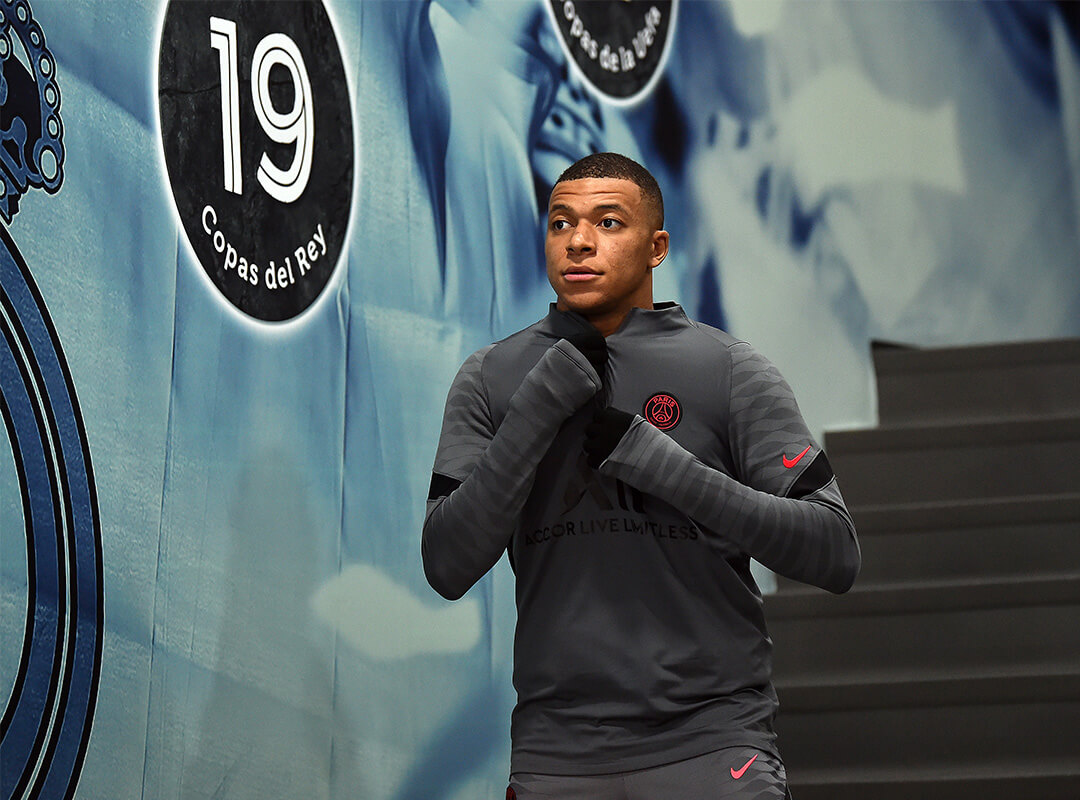
The history of the Santiago Bernabeu
Founded in 1902, Real Madrid Club de Futbol has had different stadiums since its creation, marking the beginning of the club's history, before discovering the Estadio Chamartin in 1923. In this stadium, which had a capacity of only 15,000 spectators at the time of its construction, Real won their first Spanish Championship title in 1932.
In 1936, the civil war broke out in Spain and the historic Chamartin Stadium suffered the consequences of the conflict. It was rebuilt and reopened for the first post-war derby against Atletico Madrid in 1939. However, despite a new capacity of 25,000 seats, demand for Real's matches at the time remained high.
In 1943, Santiago Bernabeu became president of the Merengue club and quickly undertook a project to build a new stadium: he imagined the New Chamartin, a stadium capable of seating almost 100,000 people.

After three years of work, Madrid fans were able to see the new Real Madrid stadium on December 14, 1947. On that day, Real was facing Os Belenenses, champion of Portugal at the time, to inaugurate their new home. In that match, Real won 3-1 and Sabino Barinaga was the first scorer in the history of the stadium, which was later named the Santiago Bernabeu. In 1955, after a vote by the delegate members of Real Madrid, the New Chamartin stadium was renamed Santiago Bernabeu stadium, as a tribute to its emblematic president, who had worked so hard for the development of the Merengue club. During this period, the stadium reached a capacity of 125,000 seats.
The Santiago Bernabeu stadium was the scene of the second edition of the European Champion Clubs' Cup in 1957, when Real Madrid and Fiorentina met in the final. The Madrid team won the second UCL of their history in front of their fans, the second of an extraordinary series of five consecutive European Champion Clubs' Cup victories following the creation of the competition.
In the summer of 1982, Spain hosted the 12th edition of the World Cup. In preparation for this global event, the Santiago Bernabeu stadium was almost completely rebuilt and its capacity reduced to 98,776. On July 11, 1982, it hosted the World Cup final between Italy and West Germany. That evening, the Azzurri won their third World Cup in this mythical stadium, following a 3-1 victory over the Germans.
Major events at the Santiago Bernabeu
2018: Copa Libertadores final between Argentine clubs Boca Juniors and River Plate (1-3)
2010: UCL final between Bayern Munich and Inter Milan (0-2)
2002: Arrival of the Vuelta, the Spanish cycling tour
1982: World Cup final between Italy and West Germany (3-1)
1982: Meeting between Pope John Paul II and Spanish youth
1980: UCL final between Nottingham Forest and Hamburg SV (1-0)
1969: UCL final between AC Milan and Ajax Amsterdam (4-1)
1964: European Championship final between Spain and the Soviet Union (2-1)
1957: UCL final between Real Madrid and Fiorentina (2-0)
PSG at the Santiago Bernabeu
-

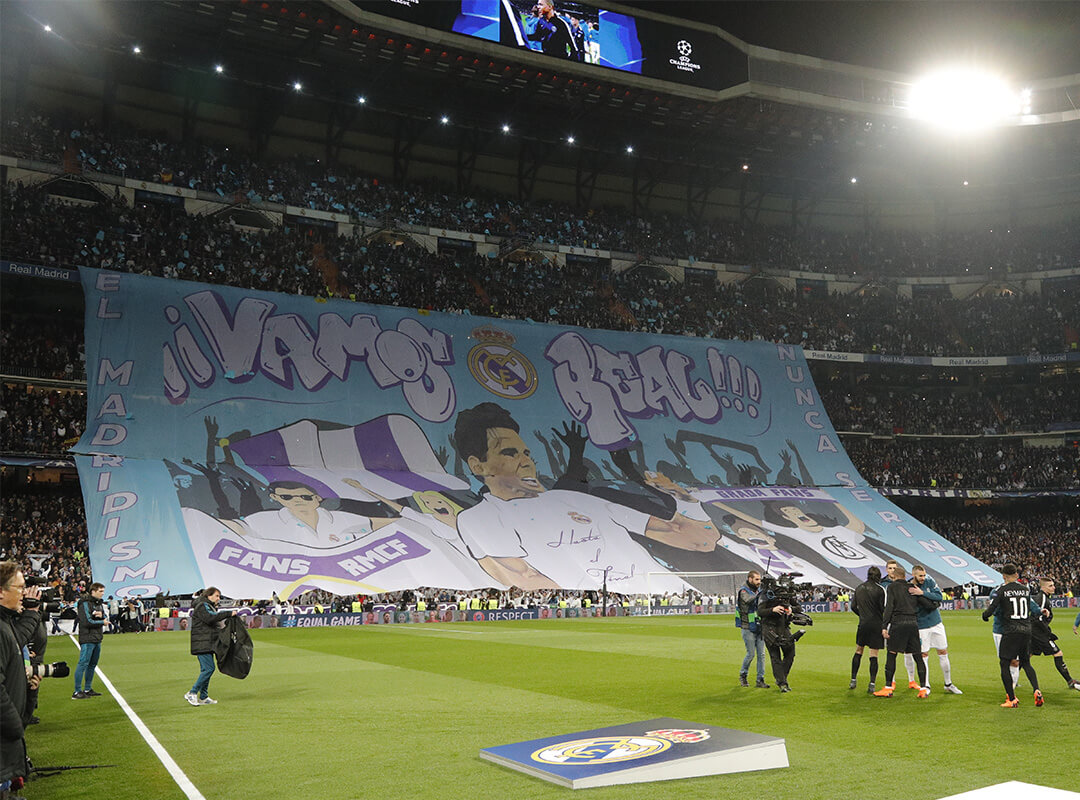
1 Real PSG 2022 (3-1): Champions League Round of 16
After a 1-0 victory for Paris Saint-Germain in the first leg thanks to a goal from Kylian Mbappé, PSG was leading the double header against Real Madrid. Driven by an incandescent Santiago Bernabéu and an great Benzema, Real achieved a real feat by qualifying, before winning another C1 a few months later.
-

2 Real PSG 2019 (2-2): Champions League group stage
On November 26, 2019, the rivalry on the European scene between Paris Saint-Germain and Real Madrid was as strong as ever. PSG, who were still 2-0 down in the 79' after 2 goals of Benzema, made a historic comeback. Thanks to a goal from Mbappé in the 81st minute and Sarabia in the 83rd minute, the Parisians took first place in their group.
-
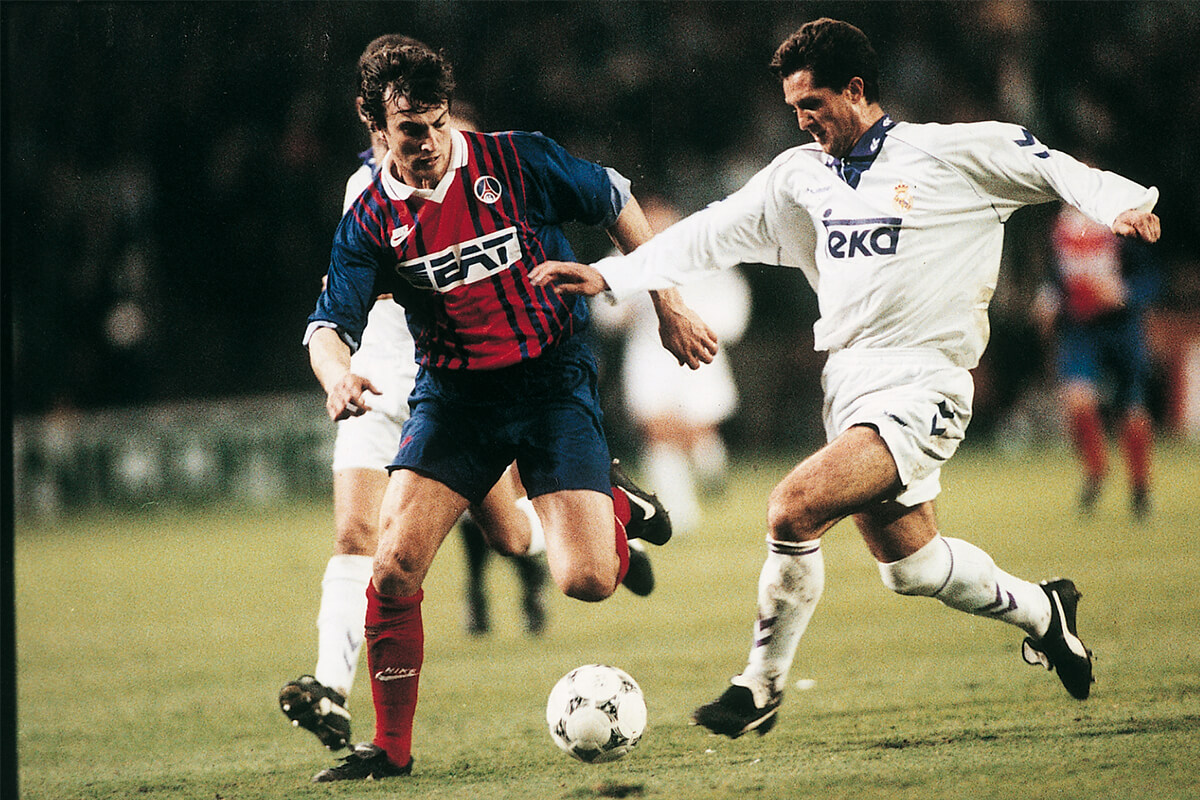
3 Real PSG 1994 (0-1): Cup Winners Cup Round of 8
One year after the disappointing defeat at the Santiago Bernabeu, Paris Saint-Germain had to play another ¼ final in Madrid...this time in the UEFA Cup Winners' Cup. Thanks to a goal from Georges Weah, PSG defeated Real in what will remain one of the most prestigious away victories in the history of the Parisian club.
-
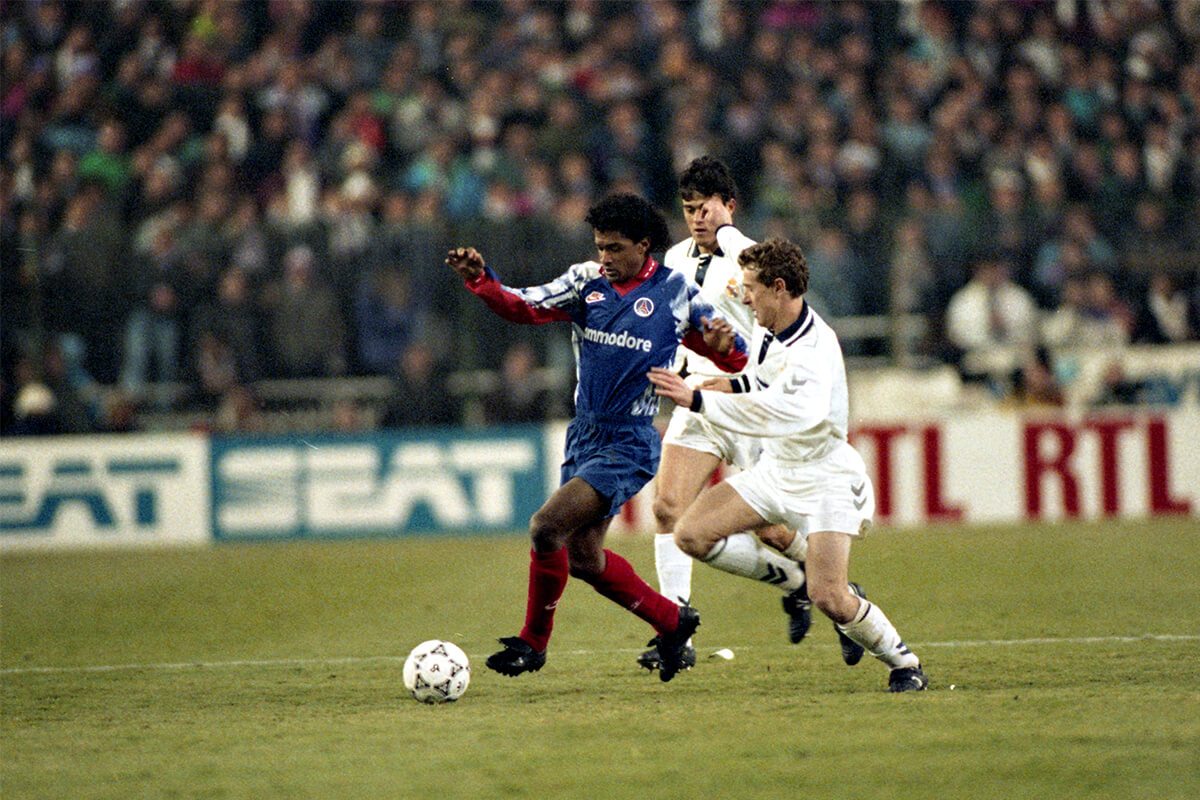
4 Real PSG 1993 (3-1): UEFA Cup Round of 8
On March 2, 1993, Paris Saint-Germain travelled to the Santiago Bernabeu to face the great Real Madrid. PSG were pushed around by Madrid and lost 3-1, but David Ginola's away goal was decisive in the quest for one of the greatest feats in PSG's history in the return match at the Parc (4-1).
Around the Santiago Bernabeu
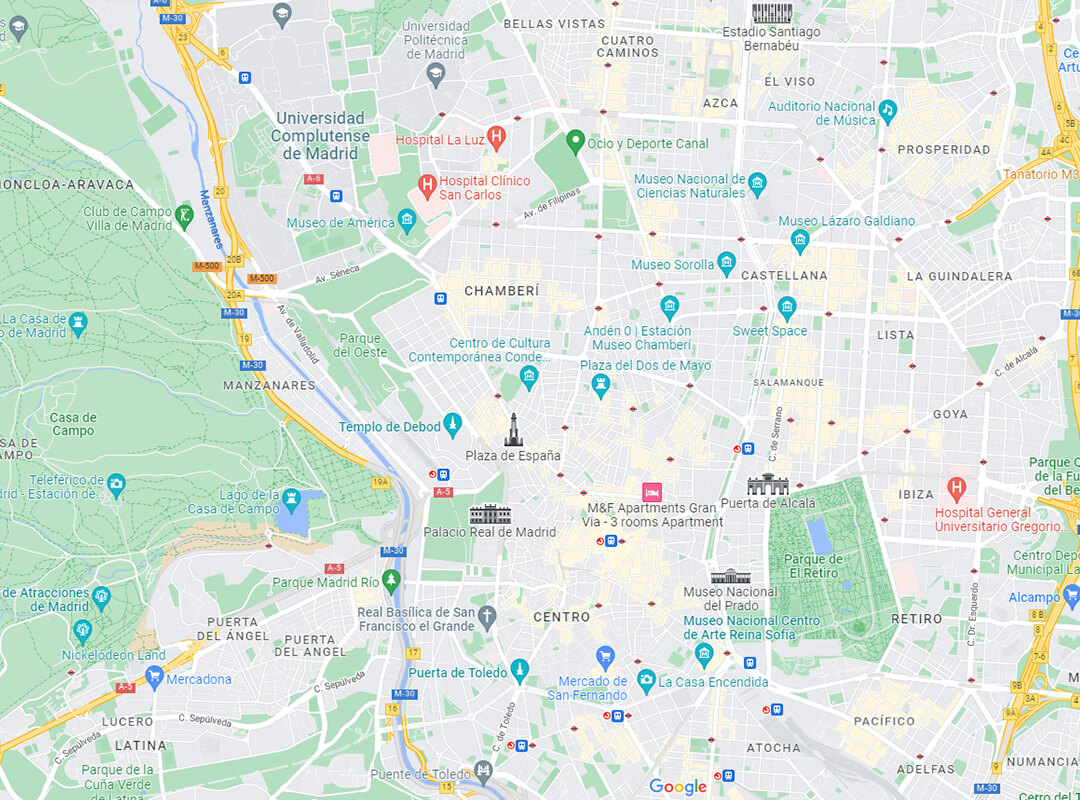
In Madrid, the Santiago Bernabéu is a true monument and an integral part of the Spanish capital's heritage. But the Real Madrid stadium is not the only attraction in this city, which has many other places that are not to be missed:
- Puerta del Sol: A real meeting point for Madrilenians and adorned with the emblems of Madrid, the Puerta del Sol is also one of the most lively squares in the city
- Palacio Real de Madrid: With an area of 135,000 m2 (almost twice the size of Versailles), the official residence of the King of Spain is a majestic palace built in the 18th century.
- Museo del Prado: One of the most important art museums in the world, housing the greatest works of Spanish painting
- Gran Via: With its hundreds of shops, restaurants and famous monuments, Madrid's most famous avenue is known as the Broadway of Madrid
- Plaza Major: Inaugurated in the 17th century, the Plaza Major is the historic and emblematic square of the city of Madrid
Legendary matches at the Santiago Bernabeu
Real Manchester City 2022: Champions League semi-final
After heroic round of 16 and 1/4 final where Real came back from hell twice in the seconds legs at Santiago Bernabeu, the Casa Blanca players were backed into a corner after losing to Manchester City at the Etihad Stadium in the first leg (3-4). In the second leg, while City had opened the scoring and were leading by 2 goals on aggregate, at the end of regulation time, lightning struck again at the Santiago Bernabeu.
The entry of the new generation with Rodrygo and Camavinga changed the course of this match forever. Benzema's pass in the 90th minute saw Rodrigo fire the ball into the back of the net to give the Merengues another tiny hope at qualification. A minute later, the young Brazilian winger scored again with a brilliant header to set up an extra-time goal that even the most ardent Real fans could not have imagined.
Driven by an entire stadium and carried by their destiny, the Real players achieved the impossible by qualifying thanks to a Benzema penalty in extra time. A few days later, Real won the 14th Champions League of its history at the Stade de France, beating Liverpool FC.
Real Fiorentina 1957: European Champion Clubs' Cup Final
After winning the first edition of the European Champion Clubs' Cup, Real Madrid was once again in the final, trying to win another continental trophy and further extend their dominance. The final was played at home, at the Santiago Bernabeu, in front of more than 124,000 spectators who were eager to know who will win this second edition.
Before facing Fiorentina in the final, Real Madrid had to defeat OGC Nice in the quarter-finals and Manchester United in the semi-finals.
With their stars of the time, Real Madrid won 2-0 in front of their fans thanks to goals from Alfredo Di Stefano and Paco Gento. This was the second time in as many editions that Real had won the European Champion Clubs' Cup and it was only the beginning of their incredible run of five consecutive victories.